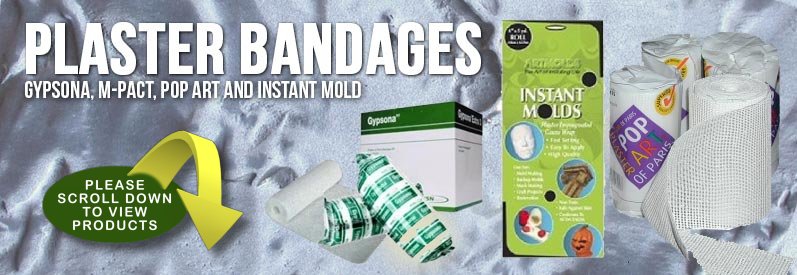
Widely used in the medical sector and other industries, plaster of
Paris is a material that has been an influential one since the
ancient days.
It gave forth one of the products called as plaster of Paris bandages, mainly considered as a material used to help recover fractures mainly related to bones.
Plaster bandages of a varied type are used in the medical sectors. Sterile plaster bandages are used to help supporting limbs, medical prosthesis and in forming hearing aids.
It gave forth one of the products called as plaster of Paris bandages, mainly considered as a material used to help recover fractures mainly related to bones.
Plaster bandages of a varied type are used in the medical sectors. Sterile plaster bandages are used to help supporting limbs, medical prosthesis and in forming hearing aids.

The manufacturing process of these bandages is also interesting. A
woven fiber is soaked into the plaster material, which is later made
to dry up. Plaster bandages are also soaked in water before using. It
is applied in the wet state and after administration; it solidifies
and does not lose its shape.
Modeling plasters experience different usage. In Orthopedics, limbs are molded in plaster to deliver a shape of the real limbs. This is done to make artificial limbs. Plaster is also the materials to cast limbs that contributes to the fitting of medical prosthesis.
Modeling plasters experience different usage. In Orthopedics, limbs are molded in plaster to deliver a shape of the real limbs. This is done to make artificial limbs. Plaster is also the materials to cast limbs that contributes to the fitting of medical prosthesis.

If the process for making it is managed nicely with due attention, then you would get an awesome detailing and resolution in the desired cast object plaster of Paris bandages online, then consider exploring the website of EnvironMolds LLC. You can also call them at (866) 278-6653.